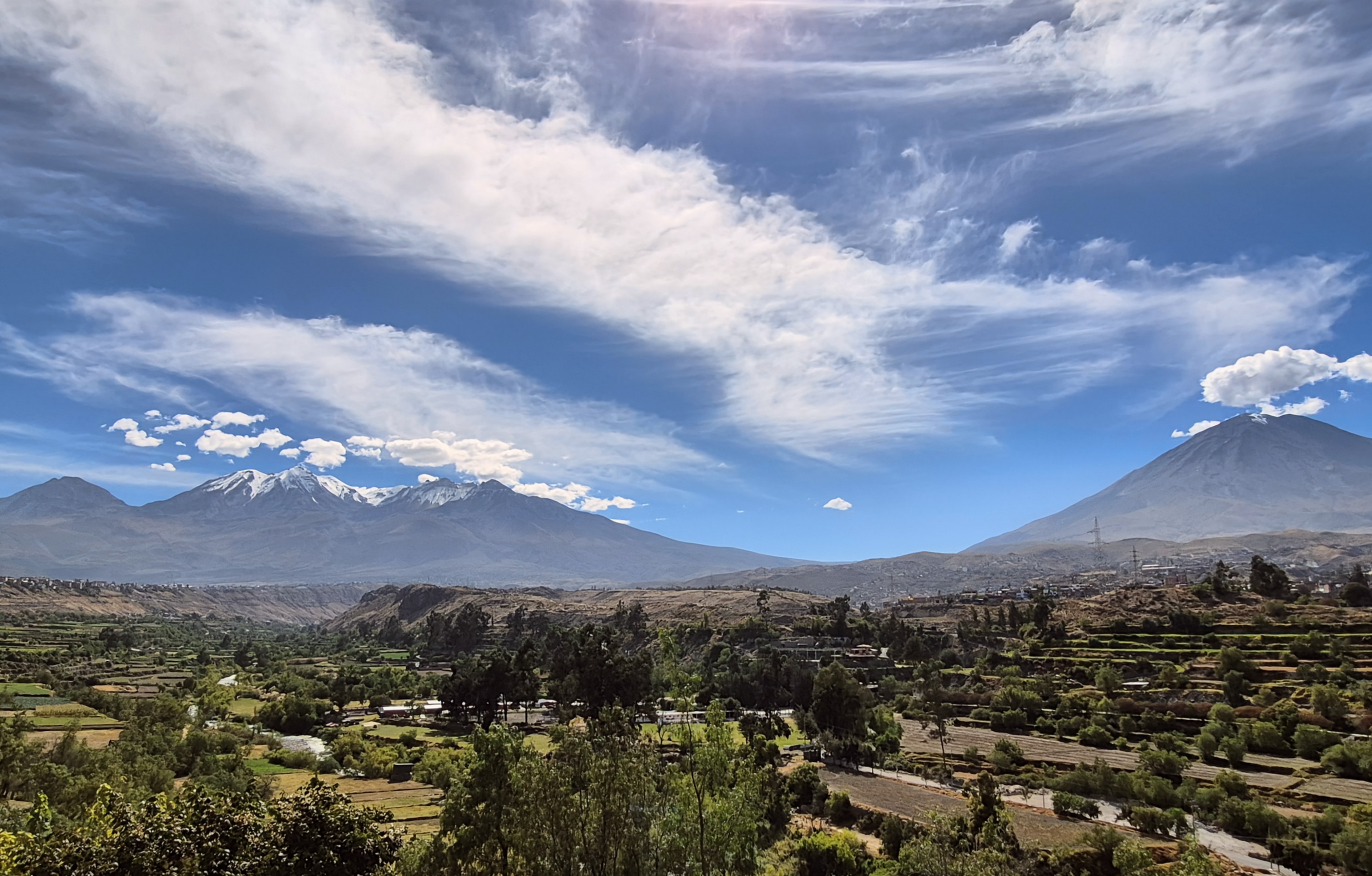
Arequipa, Peru, June 30, 2025
We arrived in Arequipa mid-afternoon and the view from the air revealed the desert terrain and enormous volcanoes around the city. It was larger than we expected, with around 1.8 million people and a sprawling layout with whole neighborhoods perched in the shadows of the three major volcanoes — Chachani, Misti, and Pichu Pichu.
The Wyndham Costa del Sol, Arequipa is located in the quiet, green Selva Alegre neighborhood, about a 15-minute walk from the city’s historic center. The property is surrounded by spacious, well-kept gardens, where three alpacas graze. Juanita, a 150-year-old tortoise and long-time resident of the grounds, has been part of the landscape longer than the hotel itself.
After a nap, we headed down into the historical district to find a place for dinner. Walking the streets is a completely different experience than most other South American cities we have visited. It has a European feel—narrow, hilly and sometimes winding, walkable, and full of historic architecture. We wound down the lively streets filled with venders and folks out shopping and dining, and came to the Plaza de Armas. The square is large, active, and felt very safe, with many people out enjoying the evening. Arequipa’s main square dates back to 1540 during the Spanish colonial period. Following a major earthquake in 1582, the city was largely rebuilt using sillar stone.
Sillar, the material that gives Arequipa its nickname, “La Ciudad Blanca” (The White City), is a type of white volcanic stone formed over two million years ago from eruptions from the volcanoes that left behind thick layers of compacted volcanic ash and rock, which eventually hardened into the porous, lightweight stone. While most commonly white, sillar can also appear in pink, gray, or yellow tones depending on its mineral content. Most of the buildings in Arequipa are white, but there are some stunning examples of the pink stone also. The Spaniards who built most of the old city were from Seville, Spain. Apparently, the stones reminded them of home, so they stayed.
The cathedral, completed in 1656, is white, sillar, and at night, the building is lit, bathing the remarkable stone walls and arches in a warm glow. After a stroll, we found a rooftop restaurant with decent food, mediocre wine and a lovely atmosphere. The highlight was Knox’s observation of the waxing moon, tipped on its back, as it should be so close to the equator. Our walk back to the hotel —about 30 minutes uphill— was tougher than the decent. We noticed the altitude for sure!
Day 1 Photos HERE.