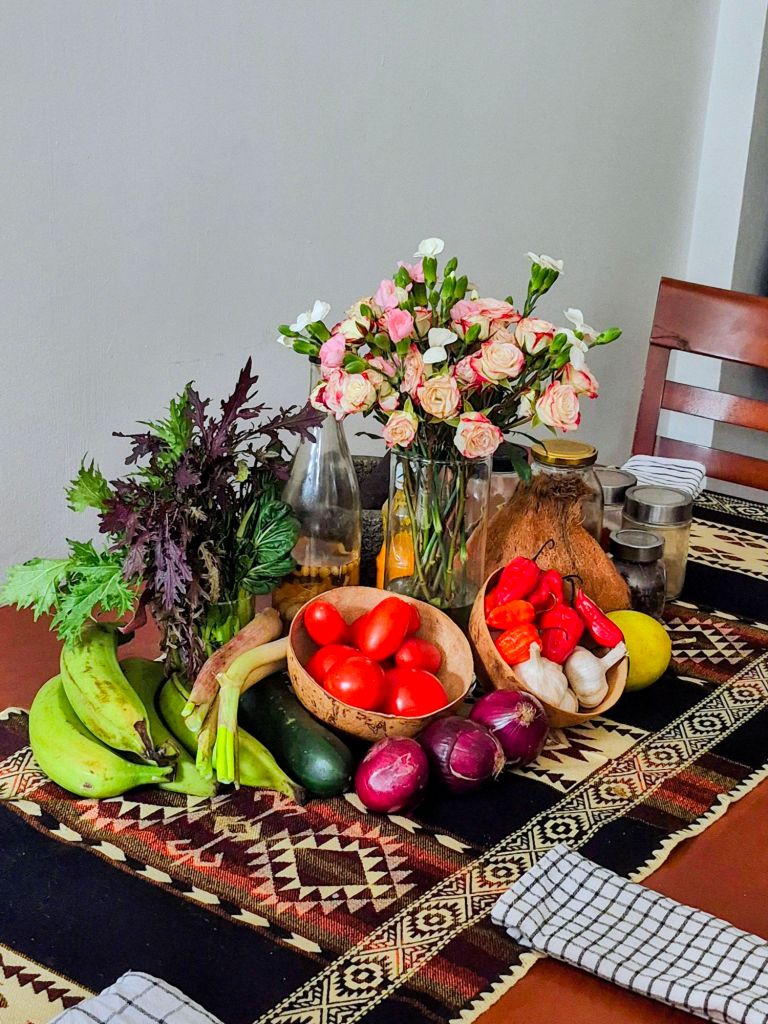
We had a restful morning and then headed to the Caribbean Colombian cooking class our friends had arranged in Bogotá with the chef, Cristina Muñoz. She’s from Cartagena where she worked for years as a chef and gave lots of private cooking classes. She has only been in Bogotá a few months, which explains the menu – coastal food, her food, that she learned how to cook from her mom. The class was held in her apartment in a neighborhood near downtown. Small, charming, and with a tiny kitchen and living room/dining room where we did all the prep and later enjoyed the meal we had prepared. We started at 12:30 and finished eating around 5:00.
Cristina is a really energetic, gregarious person with lots of ideas and stories to tell. She had prepared an ambitious menu and we got to work right away. It was clear immediately that her objective is not to cook for you while you watch and take pictures. Her objective is to teach you as much as she possibly can about Colombian food, Colombian cooking, and Colombian tradition in the time you are with her. She is a spitfire. She has more energy and more positivity than anyone you’ll meet.
We began with a lesson about the herbs we’d be using today, and then moved on to cracking open the coconut (with a hammer!) peeling it and taking out the meat and grating it, which I’d never done before. It’s not easy!
Then she showed us how to prepare mojitos, which we drank while preparing the ingredients for successive courses. There were many courses! What follows is a description of all of them as best I can remember. There are lots of pics and videos to give you an idea.
Casabe was dessert which we started first by preparing the coconut and making it sweet by slowly cooking it down with cloves, cinnamon, and milk until it caramelized. Later, we made cassava flatbread, made by sifting damp cassava (yuca or manihot esculenta, the starchy tropical root you boil or fry) starch straight onto a hot pan until the granules bind into a sheet. No dough, no kneading. You fill it with the sweet coconut and fold it like a quesadilla.
Patacones are green plantains fried once at low heat, smashed, dunked in heavily salted garlic water, then fried again until crisp. I had never peeled a plantain before, which is a bit difficult. First you smash it to open a seam and then you peel it from there. The garlic water was new to me and she said you can use it with with everything. Chicken, pork, anything you are sauteeing or frying. It gives things a great flavor.
Coconut rice is the coconut we grated, blended with warm water, and strained for fresh coconut milk, then cooked with rice toasted in coconut oil first, and a pinch of sugar.
Pork empanadas. First you make the masarepa dough out of cornmeal and water, then you sautee pork with cumin, allspice, and a splash of wine or beer, with red onion added at the end so it keeps its texture. To construct them is so much easier than in Argentina! You take a ball if dough, smash it on a piece of plastic, add the filling then fold up the plastic and close the dough over the pork. Then you fry them in vegetable oil for a few minutes.
Leche de burra sauce for the plantains. Suero costeño (a fermented milk product from Colombia’s Caribbean coast, like a tangy, salty cousin of sour cream or crème fraîche) with onion, salt, and lime, rested a few minutes so the onion softens.
Fish in creole sauce for the main course. First, annatto (achiote), cumin, and allspice ground in the mortar with garlic and sweet chili. Then you sear white fish filets (or you could use chicken) in coconut oil briefly. Make a tomato sauce with onion and garlic, and add the fish to finish.
Passion fruit vinaigrette is passion fruit pulp strained through a sieve, olive oil, salt, pepper, emulsified at the last second. This was the dressing served over a lovely salad of greens you serve yourself in the middle of the table plus cucumber and tomato slices.
Cristina sent us the full recipes (in English) afterward, plus a jerk chicken recipe we had talked about. One piece of practical vocabulary she made sure we left with: allspice is “pimienta de olor” here. Easy to find, but you have to ask for it by the right name. We may try to find some in Cartagena.
Cristina also gave us lots of recommendations for Cartagena, including restaurants, neighborhoods to check out and salsa joints. And she told stories and showed us many of her cooking/food books.
All in all an amazing afternoon! Everything was absolutely delicious and we learned a lot!
Spent the evening digesting our lunch (it was a big meal!), relaxing and packing for our next stop, Cartagena!
Day 8 Bogotá Photos/videos here:


Leave a Reply