After a lovely buffet breakfast at the hotel, we walked 15 minutes downhill to the subway to head toward Comuna 13, the hillside barrio where Medellín’s notorious, violent government crackdown took place in the early 2000’s. The walk down the steep 10th Street from our hotel to the river is lined with cafes and boutiques, although the sidewalks are narrow and crowded and the traffic is loud. Continuing down, the street drops steadily toward the valley floor and you cross Avenida El Poblado, the big multi-lane arterial to finally reach the modern subway station for the barrio. We had no problem buying a pass and finding the right direction, and once on the train, the ride was smooth, clean and safe, although the system carries a ton of people as all big city subways do. And because it’s all above ground, we got a better sense of the enormous size and hilly geography of the city. After transferring once with no problems, we arrived at San Javier, the train stop at the bottom of Comuna 13. And almost immediately our guide for the day appeared, Bryan, and we set off to board a mini bus that took us part way up the impossibly steep, narrow, streets of the barrio.
After a fascinating stop at a coffee roaster, where we learned about the coffee growing/drying/roasting process and sampled several very different coffees, we set out to climb the touristy barrio”s streets, all the while hearing about the history of this remarkable place. We stopped for several touristy experiences along the way, including art galleries, a place to try aguardiente, Colombia’s national spirit, distilled from sugarcane and flavored with anise, which we did while donning rediculous costumes, and at the top a hip hop performance (see the video in the Google photo album).
Comuna 13 sits on Medellín’s west side and was controlled by armed groups for decades, first leftist militias, then paramilitaries, because whoever ruled had a smuggling route (for drugs and arms) out of the city. In October 2002, the state moved in with Operación Orión, the biggest urban military operation in Colombian history. It’s a complicated history with differing perspectives. In one telling, it was an operation when finally the state took the barrio back; streets reopened and killings dropped. The other side says the army handed the neighborhood to the AUC paramilitaries, who ran it for years, and that the lower homicide numbers came with a wave of disappearances of people with no ties to the guerrillas. Bryan pointed out La Escombrera, a rubble dump over the hill in the distance where families said for twenty years their relatives were buried. Forensic teams began pulling out human remains at the end of 2024.
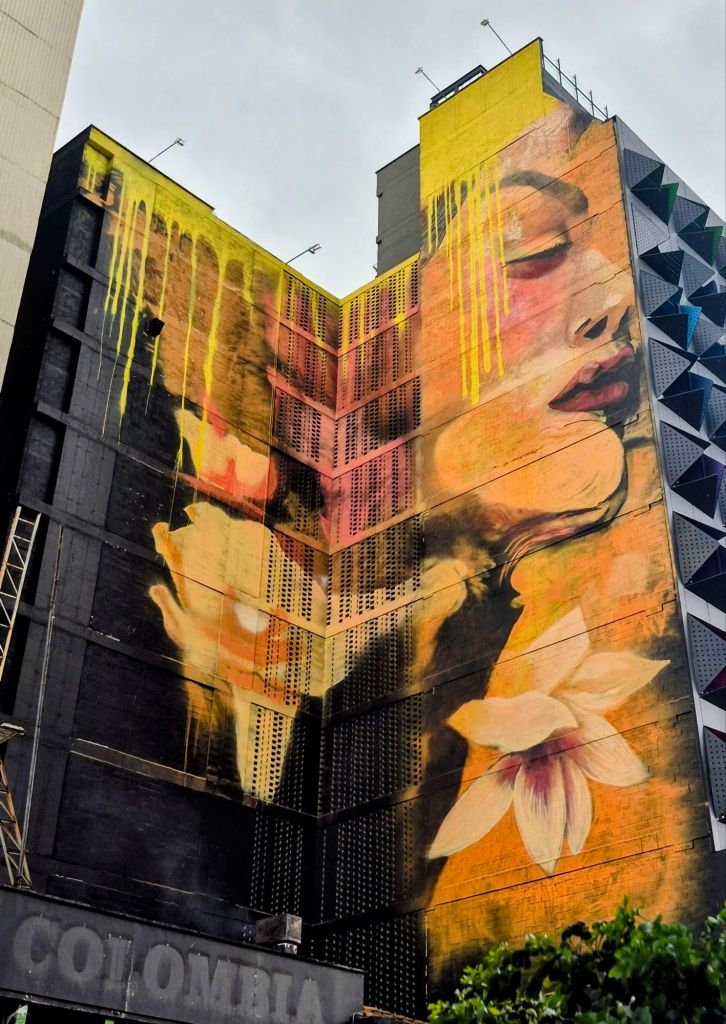
The barrio we explored is a completely transformed place. Today the neighborhood draws tourists for its relatively new escalators (built by the city that take you almost to the top of the steepest portion, the equivalent of about 28 stories), tourist shops and attractions (like the hip hop street performance we saw) and incredible graffiti, much of which documents the violence and the disappeared. Local guides, like Bryan, whose family experienced the war, and who lives in Comuna 13 as all the official guides do, make a living leading tours and relating the history of their relatives.
The tour lasted about 3 hours and by the time Bryan deposited us back at the bottom, we were exhausted and ready for a bite. We took an Uber to Las Laureles barrio for lunch. After a quick meal of ceviche and sushi, we walked around a bit to get a feel for the area. Turned out to be a beautiful section where we could see staying for a month in an air bnb during the Mendoza winter in the future!
Laureles is a residential Medellín barrio west of the river, with tree-lined streets (huge Indian fig trees line the main Boulevard) and traffic circles rather than the hills that define most of the city. It’s flat and walkable, with a vibrant café culture and way less touristy than El Poblado (where our hotel is), with plenty of restaurants and and shops clustered around two parks. It’s a beautiful, quiet residential area that reminded me of parts of Brooklyn.
On the way back to our hotel, the Uber ride took us through the heart of the city. A ton of green spaces, big parks and small squares, plus literally miles more of amazing graffiti.
After, a nap, we headed down the street to the restaurant, Carmen, where we had the 7-course tasting menu with flavors and ingredients we’ve never tasted or heard of in our lives. The menu is organized around botany: each course is named for a plant family in Latin (Passifloraceae, Myrtaceae, Arecaceae, Caricaceae, Rosaceae, Solanaceae, Malvaceae), and each dish is built around ingredients from that family. Most of the ingredients are Colombian and Amazonian natives, things like tucupi, viche, copoazú, macambo, arazá, chontaduro, and lulo. The drink pairings alternate between hyper-local ferments and classic European bottles. Just an incredible experience!
And because we were not done with the day, we found a perfect spot for a nightcap before retiring. La Casa de Ruby is a hidden cocktail bar literally across the street from our hotel, with no signage. You get in by going through a hidden door at the back of a Taiyaki ice cream shop. Inside it’s a small jazz and salsa spot known for its cocktails.
Photos and videos of Day 2 here:


Leave a comment